Flight Safety Methodological Material for Light/Ultralight Aircraft Users
1. General Flight Safety Considerations
- As in any human activity, the demand for aviation services is essential, while flight safety comes only in second place, since it represents a constituent element of these services.
- By nature, man, as a biological machine with limited capabilities, is prone to error.
- The number of mistakes made by a person depends on many factors, but above all it depends on the context in which the person's activity takes place. The more tense and dynamic the context, the more likely a person is to make a mistake.
- Since human nature cannot be changed, all that remains is to change the characteristics and components of the operating context.
- For this reason, based on points 1.2–1.4 of this chapter, in aviation the source of error lies outside the person, within a limited context — that is, through the person's interaction with technology (the aircraft and its equipment), with other persons, with the environment (operating conditions), and with procedures (training, the use of safety methods, etc.). (Under ICAO Doc 9859, the "Safety Management Manual", this is referred to as the SHEL(L) system).
- It should be noted that the same mistake can lead to different outcomes depending on the operating context.
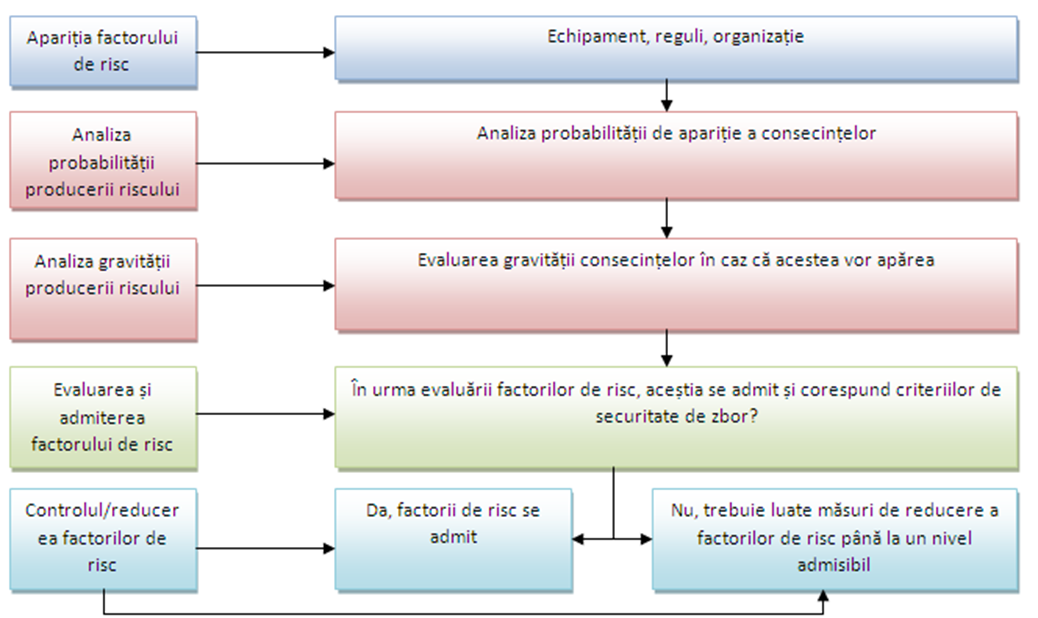
The number of operational mistakes in aviation is enormous, although not all errors lead to catastrophic outcomes. Global statistics show that, out of every 1,000,000 operational errors, 1 manifests as a system-level occurrence. This is why organising the collection of flight safety data, analysing it, and determining the level of risk is a critically important means of preventing aviation events.
Note: Global statistics also show that, over the past 10 years, in "large" aviation, on flights operated by commercial airline aircraft, 1 event occurs per 1,000,000 flight hours (100,000 in the CIS). (These figures are therefore "ultra-safe" and indicate a safe system.) In "small" aviation, this indicator drops to 10,000 flight hours (this figure indicates an "unstable system").- The concept of "error" must be distinguished from that of "violation". The difference between the two lies in intent. An error is an unintentional act, whereas a violation is an intentional act.
- Operational errors can be reduced by introducing "defences" into the "Man is a Machine" system! The more defences that exist, the less likely an aviation incident becomes.
- In both "small" and "large" aviation, errors occur that involve deliberately departing from operating norms — a phenomenon known as "normalisation of deviance". Such violations are typically caused either by the situation (insufficient time, heavy workload), by routine procedures (the normalisation and optimisation, under specific conditions, of departures from standard norms), or at the employer's request.
- Aviation activity is impossible without an aviation safety culture. By definition, this represents a collectively programmed mindset that determines how people behave in specific social and work situations and creates a "context for events".
- Aviation culture is built on national, professional and organisational levels, on the corresponding characteristics, and on a system of values. This is why the ongoing aviation activity of aeroclubs, sports federations, and groups of light/ultralight aircraft users influences the system of values they cultivate (whether developed or inherited), since it defines the boundary of acceptable activity and behaviour at the workplace (in the aircraft cockpit, at the aerodrome, in the air), as established through norms and limits.
2. Safety Objectives within the Aviation System
- Reducing the number of aviation events (catastrophes, accidents);
- Reducing the number of serious aviation accidents (on the ground or in the air);
- Reducing the number of aviation incidents;
- Carrying out planned and unplanned flight safety inspections.
- Reducing the number of aviation equipment failures;
- Reducing the number of rule violations.
3. Safety Indicators within the Aviation System
- Number of events (catastrophes, accidents);
- Number of serious accidents (on the ground and in the air);
- Number of aviation incidents;
- Number of aviation equipment failures;
- Number of rule violations;
- Presence/absence of an aviation legislative framework;
- Presence/absence of operating norms;
- Level of compliance with the norms in force.
4. Factors that Facilitate the Occurrence of Operational Errors and Violations
| No. | Type of Factor | Composition of the Factors |
|---|---|---|
| 1 | Human | Physical parameters (hearing, sight, smell, touch, appropriate height, length of the arms, legs and spine relative to the cockpit dimensions, and the degree of familiarity with the control systems of light/ultralight aircraft). Physiological parameters (state of health (pulse, blood pressure, body temperature); the effect of tobacco, alcohol and medication use on health, stress level, fatigue). Psychological factors (working capacity, mental state with regard to the flight, readiness to perform automatic landing manoeuvres, knowledge, experience, flight hours, adequate reactions and attention, etc.) Flight preparation (motivation for carrying out the flight, knowledge of the flight task, knowledge of and ability to operate the aircraft's equipment in accordance with the flight tasks, assessment of the technical condition of the flight equipment (integrity, fuel and other fluid levels, fuel tank, engine, propeller and other equipment); assessment of weather conditions and wind speed at ground level and at flight altitude, QNH and QNF pressure, visibility, humidity, air temperature, presence/absence of hazardous weather phenomena, weather forecast for the next 2–3 hours, etc., and their compliance with the flight task; assessment of the condition of the aerodrome/runway/take-off point; assessment of the atmosphere on the ground and in the air; preparation of personal uniform and equipment; presence of the required documents on board; presence/absence of technical documentation; training and flight authorisation for persons carried on board these aircraft); Flight schedule (before or after the main work activity; in the warm/cold season; under conditions of high humidity or unfavourable weather). |
| 2 | Technical | Actual failure of aviation technology and/or equipment; Navigation defects in aviation technology; Hidden "insignificant" failure of aviation technology and/or equipment; Violation of technical inspection norms, of repair work, and extension of service life beyond resource limits; Manufacturing defects in light/ultralight aircraft or their equipment; Technical inspection carried out by personnel who are not authorised to perform it or who have a low level of training (experience); Technical inspection carried out in violation of established norms and procedures; Use, during technical inspection, of unsuitable materials and parts. |
| 3 | Environmental | Living conditions (housing conditions, family relationships (with spouse/children/parents and with staff at the main workplace); relations with state authorities, etc.); Aerodrome conditions: for flight preparation and execution (condition of the runway and taxiways; storage conditions for light/ultralight aircraft; traffic load on the airfield and the airspace above it; availability of means for preparing light/ultralight aircraft for flight and of maintenance facilities); Conditions for the use of airspace (airspace traffic load; flight restrictions; interaction with the Police and with the meteorological service provider); Conditions for interaction with other light/ultralight aircraft crews Presence of hazardous weather phenomena near the aerodrome/take-off area. |
| 4 | Organisational-Administrative | Lack of the means, resources and funds necessary for carrying out the flight; Lack of workplace conditions that should prevent violations of rules, instructions, etc.; Inconsistency between the Operating Rules and the correct performance of the legally required operating procedures; Lack of technical means for preventing technical errors; Lack of adequate oversight, by those responsible, of light/ultralight aircraft Users' compliance with the applicable regulations and instructions; Lack of a sanctioning system for light/ultralight aircraft Users who violate the operating norms for light/ultralight aircraft and flight regulations. Lack of organisation of flight safety data. |
| 5 | Legal/Regulatory | Lack of a common legislative framework (or its openness to interpretation) affecting all spheres of aeronautical activity (use of airspace; use of land plots at aerodromes/runways; customs duties and taxes; sole proprietorships; aviation security for light/ultralight aircraft users; aeronautical education; insurance; authorisation of aeronautical sporting activity through organisations, etc.); Lack of a legislative framework in the field of aviation (or its openness to interpretation); Lack of operating regulations appropriate to the type of activity, and of the procedures for their implementation; Lack of regulatory requirements for each type of aviation activity; Lack of procedures for imposing fines in the event of violations of operating norms or rules. |
| 6 | Economic | Unrealistic financing of aviation activity; Lack of the resources necessary for aviation activity; Lack of a vision for integrating light/ultralight aircraft into the country's economic life; Lack of state financial support for activities involving light/ultralight aircraft in the aeronautical sports sector; Lack of national structures in the field of aviation education and aviation production; |
| 7 | Political | Lack of a strategy for the development of civil aviation in the Republic of Moldova, and of a clearly defined course for the development and progress of "small" aviation in the Republic of Moldova, reflecting global, regional and national objectives, living conditions, and cultural values. |
| 8 | Social | Lack of information exchange between Users and the employees of the Civil Aviation Authority of the Republic of Moldova on flight safety issues, legislation and the regulatory framework; Lack of willingness and ability to take other people's mistakes into account; Unwillingness of light/ultralight aircraft Users to make their mistakes public and to share their experience; Unwillingness of Users to report to the Civil Aviation Authority of the Republic of Moldova statistical data on technical failures; The tendency to shift responsibility onto others. |
| 9 | Cultural | Disregard for positive tradition in the use of light/ultralight aircraft; Reliance on negative traditions in the use of light/ultralight aircraft; Disregard for instructors responsible for flight training or for training on the technical servicing of aircraft; Lack of a system for passing on previous experience in the use and operation of light/ultralight aircraft, both within and outside the Republic of Moldova; The presence of negative and bureaucratic types of organisational culture. |
| 10 | Education | Lack of agreements with the Civil Aviation Authority of the Republic of Moldova regarding training programmes for each type of light/ultralight aircraft; Lack of teaching and methodological material for each training programme; Lack of the methodological basis necessary for each type of light/ultralight aircraft The presence of deficiencies in teaching methodology; Lack of even a basic professional-psychological screening of participants in pilot training courses for light/ultralight aircraft. |
5. Hazard Factors
| No. | Type of Hazard Factor | Consequences or Outcomes | Types of Consequences or Outcomes |
|---|---|---|---|
| 1 | Natural hazard factors | Consequences of environmental actions or of the conditions under which the activity takes place |
|
| 2 | Technical hazard factors | Result of the action of energy sources |
|
| 3 | Economic hazard factors | Consequences of the socio-political climate |
|
| Formula for Light/Ultralight Aircraft Users: Myself/The Aircraft/The Environment | ||
| Myself/The Aircraft/The Environment | do we meet the established requirements? are there moments of hesitation? is there a margin? | Yes/No Yes/No Yes/No |
| If the answer is Yes/No/Yes | FLY! | |
Risk factor severity table in accordance with flight safety norms:
| Quantitative likelihood index of risk occurrence | Description of the quantitative likelihood index of risk occurrence | Degree (value) of risk probability |
|---|---|---|
| Frequent | May occur several times, or has occurred frequently | 5 |
| Occasional | May occur from time to time, or has occurred occasionally | 4 |
| Remote | Unlikely, but possible to occur, or has occurred rarely | 3 |
| Improbable | Very low probability of occurring, or no evidence that it has ever occurred | 2 |
| Extremely Improbable | The possibility of occurrence is almost excluded | 1 |
Risk factor severity (consequences) table in accordance with flight safety norms:
| Qualitative severity index of the risk | Description of the qualitative severity index of the risk | Degree (value) of risk severity |
|---|---|---|
| Catastrophic | - Numerous loss of human life - Destruction of equipment | A |
| Hazardous | - Serious bodily injury - Significant damage to equipment - A significant reduction in the safety margin due to the onset of relevant stress or physical workload | B |
| Major | - Serious incident - Bodily injury - Damage to equipment - A significant reduction in the safety margin due to workload or as a result of conditions that reduce personnel efficiency | C |
| Minor | - Insignificant occurrence (incident) - Insignificant damage to equipment - Application of emergency procedures - Occurrence of technical limitations - Occurrence of impediments in the technical process | D |
| Negligible | - Consequences of minor significance | E |
Risk factor acceptability matrix in accordance with flight safety norms:
| Proposed Criteria | Risk Assessment Index | Proposed Criteria |
|---|---|---|
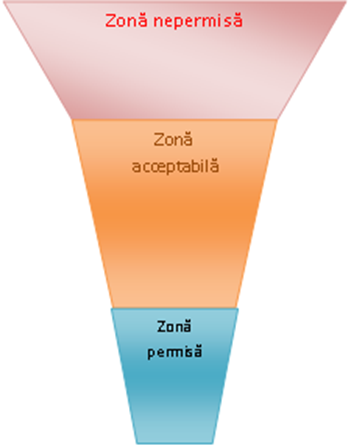 | 5A, 5B, 5C, 4A, 4B, 3A | The flight safety level is not acceptable under the given conditions |
| 5D, 5E, 4C, 4D, 4E, 3B, 3C, 3D, 2A, 2B, 2C | The safety level is acceptable provided that risk-mitigation measures are applied. Requires approval by the organisation's management or the responsible person | |
| 3E, 2D, 2E, 1A, 1B, 1C, 1D, 1E | The safety level is acceptable |
Notes:
- Flight safety risk factors must tend toward the "lowest practicable level" (LPL).
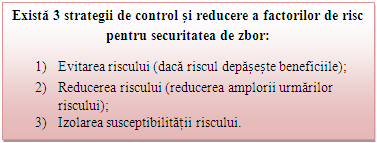
- Flight safety risk-mitigation measures must take into account:
- the weather;
- the costs;
- the difficulties involved in taking measures to mitigate or eliminate the safety risk.
Table "Flight Safety Risk Factor Control Processes":